

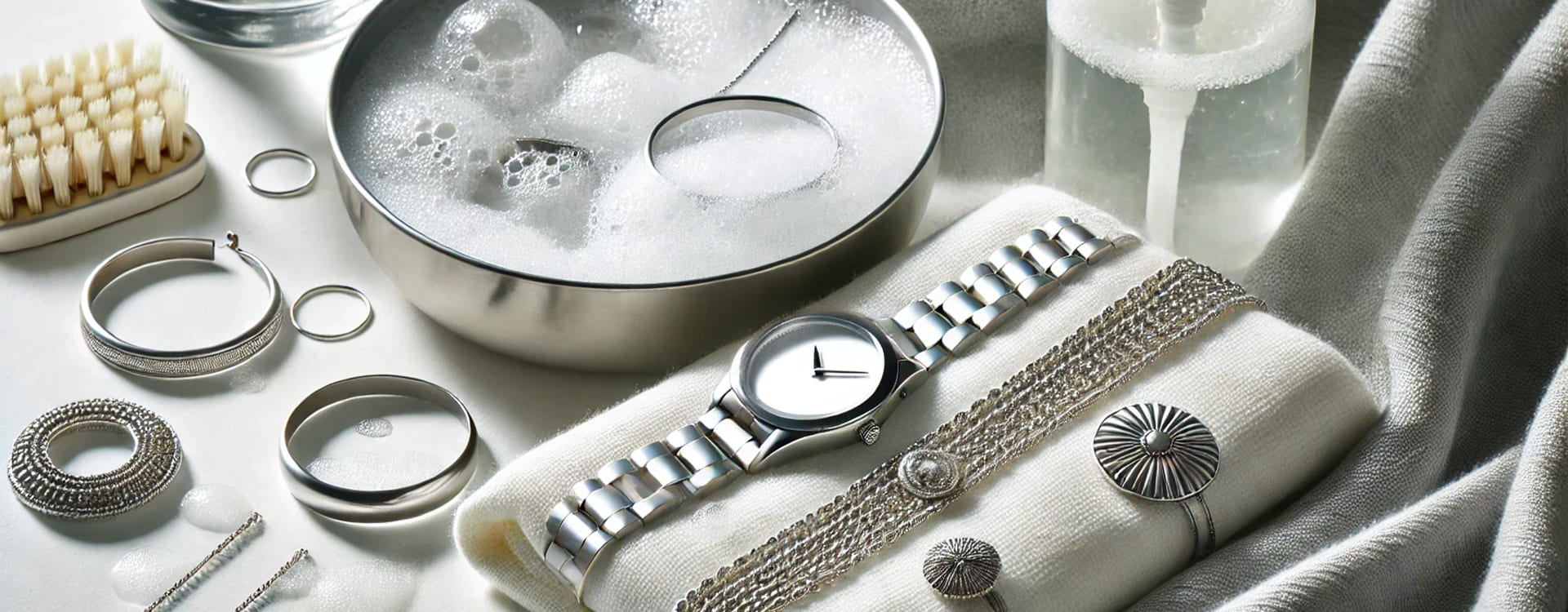
If you own personalized silver jewelry — whether it is a personalized necklace engraved with a name, a message, or a date, or a personalized bracelet — gentle methods (dish soap, diluted baking soda) are preferred to preserve the clarity of the engraving. Overly abrasive cleaning could blur the fine details that make your jewelry unique.
How to prevent your silver jewelry from tarnishing too quickly?
Cleaning tarnished jewelry is good. Preventing it from tarnishing too quickly is even better. A few simple habits can significantly slow down silver oxidation and preserve the shine of your jewelry between cleanings.
Storage: the number one rule
Silver's main enemy is exposure to humid air. Always store your silver jewelry in a velvet pouch, a closed jewelry box, or ideally in a resealable zip bag with an anti-moisture packet (silica gel). Avoid leaving them on a dresser or in a bathroom. Some artisans recommend adding a piece of chalk or activated charcoal to your jewelry box to absorb ambient humidity.
Daily habits
- Put on your jewelry last: after applying perfume, lotion, hairspray, and makeup. Cosmetic products are a leading cause of accelerated tarnishing.
- Remove your jewelry before showering, swimming, or washing dishes. Chlorine in swimming pools is particularly aggressive toward silver.
- Wipe your jewelry after wearing it with a soft cloth before storing it. Your sweat contains sulfur compounds that accelerate oxidation.
- Wear them regularly: paradoxically, silver jewelry worn often tarnishes less quickly than jewelry stored for a long time, as natural friction with the skin helps maintain its shine.
Silver polishing cloth
Invest in a special silver polishing cloth (available at jewelers or online for a few euros). Impregnated with anti-tarnish product, it allows you to remove light marks and quickly restore shine between deep cleanings. A 30-second wipe-down before storing your jewelry makes a real difference in the long term.
When should you entrust your jewelry to a professional?
Homemade methods are effective for regular maintenance, but there are situations where it is better to consult a jeweler or a professional restorer:
- Your jewelry is very old or has significant sentimental or historical value: do not take risks with an inappropriate method.
- Tarnishing is very deep and persistent after several home cleaning attempts: a professional ultrasonic bath or repolishing is required.
- The jewelry contains set precious stones (diamonds, rubies, emeralds): professional ultrasonic cleaning is much safer.
- The plating on silver-plated jewelry is worn and reveals the base metal: only electroplating can solve this problem.
Are commercial products useful?
In jewelry stores and supermarkets, you will find products dedicated to cleaning silver: liquid cleaning baths, polishing creams, impregnated wipes, or spray solutions. These products are generally very effective, but they contain stronger chemical agents than homemade methods. A few things to check before buying:
- Check that the product is compatible with stones if your jewelry contains them.
- Strictly follow the indicated soaking times: too long can weaken settings or dull the stones.
- Always rinse thoroughly after use.
However, for regular home maintenance, the natural methods described in this article provide comparable results, without extra costs or chemical risks.
Caring for personalized silver jewelry: some specific precautions
Engraved or personalized jewelry requires special attention during cleaning. Engraved areas — whether a name, a date, or a message — tend to accumulate more deposits in their crevices and may appear duller than the polished surface around them. This is normal: the contrast between the matte hollow of the engraving and the shiny surface is part of the aesthetic appeal of personalized jewelry.
To clean an engraved area, always use a very soft-bristled brush (ideally a baby toothbrush) and avoid abrasive pastes that could scratch the fine walls of the engraving. Diluted dish soap remains the most suitable method for preserving the legibility and fine details of personalized items.
If you are looking for silver jewelry that maintains a beautiful look over time, our personalized silver necklaces are made of high-quality stainless steel, a metal that naturally resists oxidation much better than silver. An alternative to consider if you find the regular maintenance of silver to be too demanding.

FAQ — Frequently asked questions about cleaning silver jewelry
Can you clean silver jewelry with bleach?
No, absolutely not. Bleach is a powerful oxidant that will permanently blacken your silver jewelry and irreparably destroy the metal's surface. It is one of the worst things you can do to silver jewelry. Even diluted, bleach should be avoided entirely.
How many times a month should you clean your silver jewelry?
For regularly worn jewelry, light maintenance (wiping with a soft cloth) after each use and a full cleaning with dish soap once or twice a month is sufficient. If you notice visible tarnishing, it is time to use a more active method like baking soda or the aluminum method.
Does vinegar damage silver jewelry?
White vinegar can be effective on solid sterling silver for stubborn stains, but it should be avoided on silver-plated jewelry and jewelry containing porous gemstones. Used occasionally and rinsed thoroughly, it poses no problem for solid silver. Use with moderation and caution.
My silver jewelry has black marks in the crevices: is this normal?
Yes, that is perfectly normal. These black marks in the crevices (especially in engravings) are silver sulfide, the result of natural oxidation. They can be removed using the methods described in this article. Note, however, that on some pieces, this blackening in the crevices is intentional on the part of the jeweler to create contrast and accentuate the relief, in which case it is better not to try to remove it completely.
Can I put my silver jewelry in the dishwasher?
No. The intense heat, harsh detergents, and powerful water jets of a dishwasher are harmful to silver: they accelerate oxidation, can weaken stone settings, and permanently tarnish certain surfaces. Dishwashers are strictly discouraged for all types of jewelry.
What is the difference between polishing and cleaning silver jewelry?
Cleaning consists of removing surface deposits of dirt, cosmetics, and silver sulfide. Polishing goes a little further: it is a slightly abrasive action that removes a tiny layer of metal to restore a perfectly smooth and shiny surface. Home methods are primarily for cleaning. Proper polishing is a professional technique used by jewelers to restore heavily damaged or scratched jewelry.
Conclusion
Making silver jewelry shine at home is quite accessible, provided you choose the right method based on the nature of your piece and the degree of tarnish. Dish soap for gentle, regular maintenance, baking soda for moderate tarnish, the aluminum foil method for more severe cases—each has its benefits. The key is to act regularly rather than waiting until the jewelry is heavily tarnished, and to always dry it thoroughly after cleaning.
And if you are looking to give a piece of jewelry that requires little maintenance while having the elegant look of silver, discover our selection of personalized necklaces and personalized bracelets made of stainless steel: a material naturally resistant to oxidation, ideal for keeping its original shine without any special effort. You can also consult our article on how to properly care for your gold, silver, and steel jewelry or our guide on how to clean stainless steel jewelry for the complete maintenance of your entire collection.





Leave a comment
This site is protected by hCaptcha and the hCaptcha Privacy Policy and Terms of Service apply.