

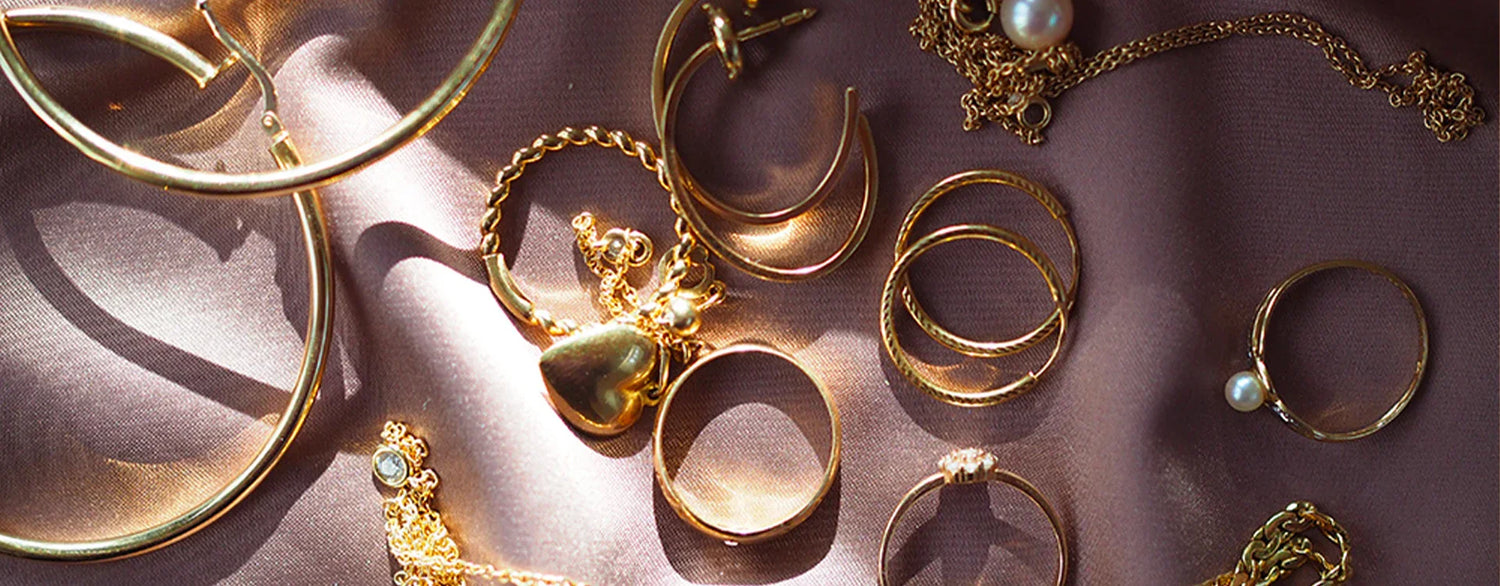
You’ve fallen for a gold-plated piece of jewelry, or someone has gifted you one, and now you’re asking yourself the question everyone eventually asks: how long will it last? Will it tarnish? Will it turn black? Is it "real" quality, or is it a cheap piece of jewelry that will get ruined in two weeks?
These are legitimate questions, and they deserve clear answers. In this article, we explain exactly what gold plating is, how it’s made, how long it lasts depending on how it’s worn, and how to maintain it to keep it for as long as possible.
What exactly is gold plating?
Gold plating is a manufacturing process that involves depositing a thin layer of gold onto the surface of a base metal—usually stainless steel, brass, or copper. This layer is applied through an electrochemical process called electroplating: the base metal is submerged in a solution containing dissolved gold, and an electric current causes the gold to deposit onto the surface.
The result: a piece of jewelry that has all the visual appearance of gold at a fraction of the cost of solid gold jewelry.
Gold-plated, gold-filled, vermeil: what are the differences?
These three terms refer to jewelry with a gold layer on the surface, but with significant differences:
Gold-plated: A gold layer 0.5 to 2.5 microns thick. This is the most common, accessible version, and the least durable over time. It is what you find in the vast majority of fashion jewelry.
Gold-filled: A much thicker layer of gold, representing at least 5% of the jewelry’s total weight. Much more durable than standard gold-plated jewelry—some gold-filled pieces can last 20 to 30 years without losing their luster.
Vermeil: A gold layer of at least 2.5 microns deposited onto 925 sterling silver. This is the most noble version of gold plating, used in quality jewelry making.
At Mon Cadeau Unique, our jewelry is made of stainless steel with a gold-plated finish—which combines the strength of steel with the warm appearance of gold.
How long does gold-plated jewelry last?
That is THE question. And the honest answer is: it depends. It depends on the thickness of the plating, the quality of the base metal, and especially how you wear and care for your jewelry.

As a general rule, here is what you can expect:
Standard gold-plated (0.5 to 1 micron): 6 months to 2 years depending on wear. Sufficient for jewelry worn occasionally or for special occasions.
Thick gold-plated (2 to 2.5 microns): 2 to 5 years with proper maintenance. Suitable for regular wear, but not intensive daily use.
On stainless steel: The advantage of steel as a base metal is that it does not react to humidity or air—which significantly slows down oxidation and extends the lifespan of the plating. This is why our gold-plated steel jewelry lasts longer than gold-plated brass or copper jewelry.
What causes gold plating to deteriorate?
The main enemy of gold plating is friction and chemical agents. Understanding what accelerates wear will allow you to adapt your habits to extend the life of your jewelry.
Sweat and water
Sweat contains salts and acids that gradually attack the gold coating. Similarly, water—especially chlorinated pool water or salty seawater—can accelerate the wear of the plating.
Good news: if your jewelry is on a stainless steel base, the steel itself will not rust or oxidize upon contact with water. Only the gold plating may gradually fade. Our article can you shower with stainless steel jewelry answers this exact question.
Cosmetic products
Perfumes, moisturizing creams, skincare oils, deodorants... These products contain chemical compounds that attack the gold coating. The golden rule (no pun intended): put your jewelry on last, after all your skincare and beauty products. And take them off first, before applying anything.
Repeated friction
Plating wears down at friction points—the inner side of a bracelet, the ends of a chain, or parts of the jewelry that rub against skin or clothing. The more actively a piece of jewelry is worn (sports, manual labor), the faster the wear will be in those areas.
Household and cleaning products
Bleach, detergents, cleaning products... These are aggressive to all jewelry, and especially to gold plating. Always remove your jewelry before cleaning or doing dishes.
How to maintain gold-plated jewelry to keep it as long as possible?
A few simple steps can significantly extend the life of your gold-plated jewelry.
Clean it regularly with a soft, dry cloth. Gentle polishing removes the residues of sweat and cosmetic products that accumulate on the surface. Never use abrasive products or rough cloths.
Store it properly. Gold-plated jewelry should be stored away from moisture and air, ideally in a fabric pouch or a closed box. Avoid letting your jewelry get tangled—friction between pieces accelerates plating wear.
Remove it for intense activities. Sports, gardening, manual work—these are all activities that put stress on jewelry and accelerate wear. Make it a habit to remove it during these times.
Avoid direct contact with perfumes. Spray your perfume on your skin, let it dry, then put on your jewelry. Never the other way around.
Our comprehensive guide how to properly care for your gold, silver, and steel jewelry details all the essential steps to take care of your jewelry according to its material.
Gold-plated vs. solid gold: which one to choose?
The question comes up often. Here is an honest comparison to help you make the right choice based on your needs.
Solid gold (14 or 18 karats) is the ultimate luxury jewelry. It never tarnishes, never oxidizes, lasts a lifetime and even beyond—it is passed down from generation to generation. But it is 10 to 50 times more expensive than gold-plated for a similar visual result.
Gold-plated offers the same visual appearance at a very affordable price. It is aimed at those who want beautiful, personalized jewelry for daily wear without investing in luxury jewelry. With proper care, it can last for several years and keep all its luster.
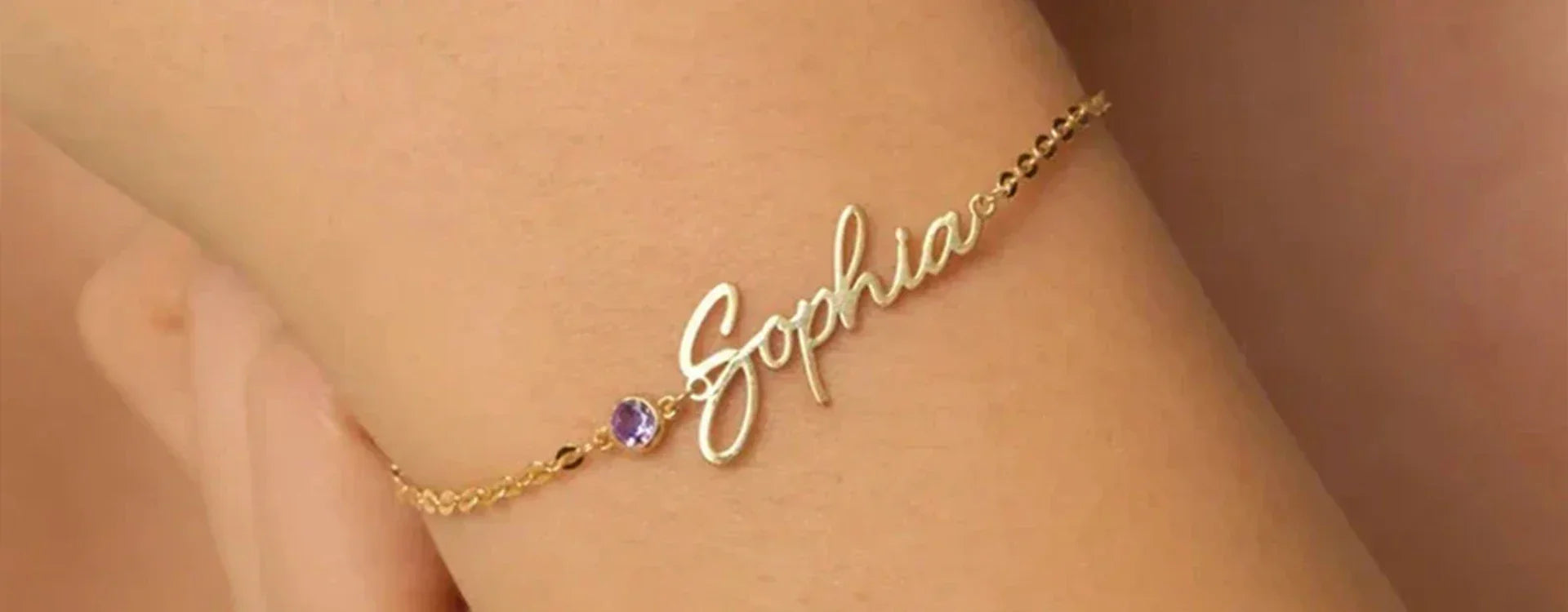
For personalized jewelry—a name necklace, an engraved bracelet, or a personalized ring—gold-plated is often the ideal choice: it allows you to have a unique piece of jewelry, personalized to your image, with an elegant and warm finish, without sacrificing personalization for the sake of a luxury jewelry budget.
Yellow gold, rose gold, white gold: what are the differences in gold plating?
Gold plating comes in three main shades, and the choice of color is often as important as the style of the jewelry itself.
Yellow gold is the most classic and warmest shade. It is particularly suitable for olive or golden skin tones and provides a luxurious and timeless look. It is the most popular color for personalized jewelry.
Rose gold (or pink gold) is obtained by adding copper to the alloy. It gives a warm and romantic pinkish-gold tint that has been very trendy for several years. It suits all skin tones and gives a modern and feminine look to the jewelry.
White gold is plated with rhodium or a white alloy—it looks like silver but with a more pronounced shine and a colder hue. It is particularly suitable for light skin tones and modern, sleek styles.
To choose between these three shades and understand the differences with solid gold, our article rose gold, yellow gold, white gold jewelry: what are the differences will give you all the keys. (Coming soon)

Can gold plating cause allergies?
This is an important question for sensitive skin. In poor-quality gold-plated jewelry, the base metal can contain nickel—a very common allergen that causes skin reactions (redness, itching) when the plating wears off and the skin comes into contact with the base metal.
At Mon Cadeau Unique, we use stainless steel as the base metal, which is naturally nickel-free and hypoallergenic. Even when the plating fades over time, the underlying metal does not cause allergic reactions. This is one of the great advantages of stainless steel compared to brass or copper used in some low-end fashion jewelry.
My gold-plated jewelry has lost its luster: what should I do?
If your gold-plated jewelry starts to tarnish or show the base metal in some places, here are your options:
Get it re-plated by a jeweler. Most jewelers offer this service at a very reasonable price. The piece will look brand new, and you can even choose to change the plating color.
Accept it as is. Some gold-plated jewelry develops a "vintage" or "worn gold" look over time that has its own charm. It is not necessarily a defect—it’s also a patina that tells the story of the jewelry.
Buy a new one. Since gold-plated is affordable, you can refresh your personalized jewelry periodically to keep it always looking fresh and shiny.

FAQ — Gold-plated jewelry
Does gold plating turn black?
No, gold plating does not strictly turn black. It can gradually fade, revealing the base metal underneath. If the base metal is stainless steel (like at Mon Cadeau Unique), it will remain shiny and silver-colored. If it is brass or copper, it can take on a greenish or reddish hue.
Can you shower with gold-plated jewelry?
You can occasionally, but it is not recommended in the long term. Water and shower products (soap, shampoo) can accelerate the wear of the plating. If your jewelry is on a steel base, the steel itself will not suffer: only the gold layer will fade faster.
How much is gold-plated jewelry worth?
Gold-plated does not have significant market value as a precious metal: the gold layer is too thin to be resold. Gold-plated jewelry has a use value and a sentimental value, not an investment value like solid gold.
How do you recognize quality gold-plated jewelry?
Check the base metal (prefer stainless steel over brass), the thickness of the plating (minimum 1 micron for quality jewelry), and the manufacturer's reputation. Jewelry sold at a very low price with thick gold plating should alert you to its real quality.
Is gold plating safe for the skin?
Yes, if the base metal is suitable for sensitive skin, such as stainless steel. The gold layer itself does not cause any allergies. It is only when the plating wears off and the base metal comes into contact with the skin that reactions can appear, hence the importance of choosing the right base metal.
Gold plating is far from being low-quality jewelry—it is simply different from solid gold, with its advantages (affordable price, wide range of personalization, beautiful appearance) and its specific maintenance requirements. Well-maintained, on a quality stainless steel base, it can accompany you for years with all its luster. Discover our personalized necklaces and personalized bracelets available in gold, rose gold, and silver finishes.





Leave a comment
This site is protected by hCaptcha and the hCaptcha Privacy Policy and Terms of Service apply.